Listeners:
Top listeners:
-
 play_arrow
The LBX Show #92 - Rerun: Annual Predictions Episode 2026!

Virtual Arena #20 – The Shared Phygital Landscape – Part 1
In this first part of our specialist feature on the Immersive entertainment landscape, we look towards the deployment of AR, MR and SR technology. Defining the latest encumbered immersive attractions and game systems, while charting the trends that are shaping the sector.
The consumer sector seems to be pivoting away from overt VR applications, while looking at an AR and MR future for immersive tech. As always, the LBE sector has been first to embrace this XR category. This feature will look at the key applications, and those looking to rollout experiences and attractions based on both encumbered and unencumbered augmented technology creating a “Phygital” (physical element married to digital representation) playscape. First, we need to understand the difference between AR and MR.
1. Defining XR Categories
– Augmented Reality (AR) [Encumbered]
Mostly using a lens or glasses-based presentation to superimpose information into the user’s vision regarding their environment (spatially). A lens based “See-Through” technique, (also known as waveguides) like the heads-up-display for a fighter pilot. The technology has grown in application with detailed imagery able to fill more of the user’s vision (holographically).
– Mixed Reality (MR) [Encumbered]
Mostly employs VR headsets that ingulfs the user’s vision, and then through front mounted cameras, projects real-world image in real-time, superimposed with digital elements to create an immersive blend or mix of physical and digital. Offering as higher level of immersion from a digital camera capture or “Pass-Through”, compared to see-through. Standalone headset tracking via onboard cameras, promoting greater MR application.
– Shared Reality (SR) [Unencumbered]
Mostly employing projection systems, but also now using LED display rooms (walls and floors), the user is placed within an environment where all the space is bathed in digital light. The need to track the user(s) movements within these spaces achieved through employing of tracking technology such as markers, or computer vision to capture and represent their progress in the virtual environment, (which we will cover in detail in the second part of this feature).
We have seen a blurring of the lines regarding the definition of AR and MR deployment as developers shape the terminology to fit their promotional needs. With the increased investment in MR capabilities for VR headsets we have seen more manufactures blur the lines. But at the same time, the hurdles that impacted developers of AR headsets and glasses have slowed consumer adoption. Most recently, Microsoft and their HoloLens hardware range of AR headsets was discontinued by the corporation – though later stated they intend to still offer limited support and software updates till 2027. While we also must be mindful of the previous confused rise, and subsequent departure of Magic Leap and their over hyped glasses.
2. Immersive AR Attractions
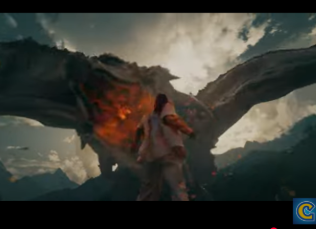
Examples of successful AR installations have appeared in attractions and exhibits. At the Kansai Expo, in Osaka, Japan, the new ‘Monster Hunter Bridge’ exhibition was launched. Based on CAPCOM’s Monster Hunter game property, an immersive space experience has been developed, which has guests walking within a LED “XD Hall” enclosure with display and vibrating floor, while using Microsoft HoloLens2 see-through AR headsets to view synthetic representations of the game’s creatures. The CAPCOM experience presents Japan’s latest full AR attraction since the launch of ‘Mario Kart: Koopa’s Challenge’ at Universal Studios ‘Super Nintendo World’. This latest CAPCOM concept marrying the LED surrounding display with the CGi supplied from the headsets worn by groups of visitors to the pavilion. No word if this experience will see greater deployment outside of Japan, but is an example of the leading application of this technology.
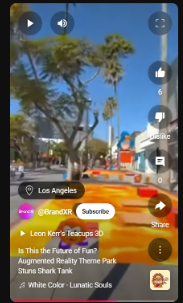
As discussed in our sister publication – The Stinger Report – coverage from the Game Developers Conference (GDC’25), the team at DreamPark presented their AR digital theme park concept, offering a virtual playscape and attraction platform. Currently in Beta-phase operation at a disused 2,300-sq., ft., parking lot in Los Angeles. Players using Meta Quest 3 headsets and their Pass-Through (MR) capability to interact with a digital representation of the playscape offering a strong Mario-vibe. Being run by the company and the team at Two Bit Circus, involved with plans to roll out the project. The company recently appearing on US television’s ‘Shark Tank’ to garner investment interest in the concept. Later it was revealed that the team at DreamPark had managed to secure $1.1m in seed funding led by Long Journey Ventures, the investment allowing the team to roll this and other Phygital applications out as a new line of attractions.
One of the leading developers of AR based experiences is Enklu, founded in 2019, and best known for their ‘VERSE Immersive’ holographic theater experiences. Creating walk-through immersive adventures for groups of guests, viewing holographic creatures and objects that are represented within the physical space, interacting with, through hand tracking. Having previously operated their own facilities running the immersive experiences, the company has packaged the system into a turnkey solution that is being dropped into existing entertainment venues – such as with their partnership inside Main Event locations. Guests wearing AR headsets such as the Microsoft HoloLens2, as well as others to navigate the Phygital environment as a standalone attraction.
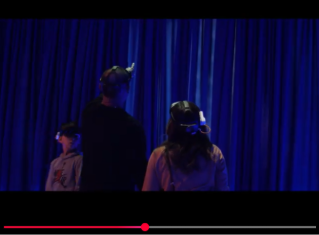
Enklu celebrated their entrance into the “Cinetainment” scene with their first theater installation. Cinetainment referring to the increased investment by the theater industry to add entertainment spaces to support their flagging movie ticket revenue. The D’Place Entertainment’s Mary Pickford Theatre in California, became the first cinema installation for the AR attraction. With an 800-sq., ft. space near the lobby, converted to support the VERSE holographic theater. The walking augmented reality attraction is seen as a supporting entertainment to the seated big-screen theater experience. Enklu have been working on defining their AR experience, utilizing free spaces ranging from 600-sq., ft., to 2k-sq., ft., currently deployed across nearly 20 locations internationally. The company is also now looking at taking an ad agency approach, managing paid advertising for their experiences across their installed base.
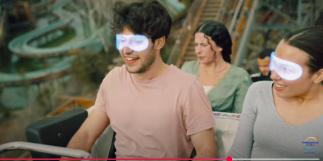
One aspect of the current attraction market has been a growing adoption of MR – one of the first being at ‘Super Nintendo World’, using See-Through technology as we stated earlier. But with the growth in VR headsets supporting Pass-Through we have seen a new growth in development. One of the latest VR headsets – the PICO 4 Ultra has seen several developers deploying this system in MR mode. Port Aventura World announced the opening of what they called the “Worlds first MR roller coaster”. Entitled ‘El Diablo Neo’ [‘The Devil Neo’], riders wearing special PICO headsets on the coaster, representing synthetic objects and creations interposed with the real-world visuals. The experience is an optional upscale extra for riders to buy. Developed in partnership with Spatial Voyagers, using AI in the creative process. This marking the first in the ‘Neo’ series of MR attractions planned by the park. We will report later, on other developers that are using the MR capability of the PICO hardware which seems to have proven popular.
3. Immersive AR Sports
Meleap was one of the first to roll out an AR based headset game experience for location-based entertainment and activity deployment and have achieved momentum both as a sports title and a general entertainment experience. The company using smartphone headsets supplying the AR visuals in pass-through mode, along with a player armband touchscreen, in an eight player PVP game. The operation has deployed some 10 ‘HADO Arenas’, and another 30-playing field and store installations internationally.
The ‘HADO’ platform offering a unique AR sports experience (dubbed “techno-sport” by the company), with international competitions held across venues, such as at the Coventry, UK arena. These competitions culminating in the annual ‘HADO World Cup’ that took place in Shanghai, China at the end of May 2025. Under the tagline “HADO Virtual Sports Festival”, with some eighteen countries competing, the US seeing a third place, against second place South Korea and first place Japan – the competition being the highlight event of the ‘HADO Virtual Sports Festival’. This is one of the first AR sports to gain international recognition – even if the media is slow to cover events.
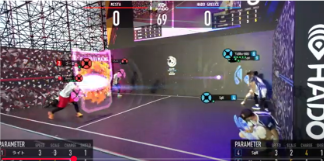
This follows the “ESL Premiership”, the UK’s largest and longest standing eSports tournament who partnered with HADO, hosting 12-teams as part of the ESL FACEIT Group, eSports gaming championship community. meleap defining the AR sports version of the platform as an eSports-style business, first founded in Japan during 2014. The Stinger Report one of the first to report on its application, has seen meleap raise some $3.5m in 2022, from China’s QC Investment. While at the same time signed exclusive agreements with HADO USA – Technology Sports. meleap have also rolled out ‘HADO Monster Battle’ aimed at a younger audience, with a shooting gallery AR approach. The platform has also looked at the educational application of its physically active experience and announced the first academic program in college to study the creation of new sports that integrate physical activity. Shibaura Institute of Technology becomes the first college in Japan to introduce the ‘HADO’ platform to studies. A growing trend seeing a pivot to STEM based deployment has grown in commercial XR developers as well as in eSports.
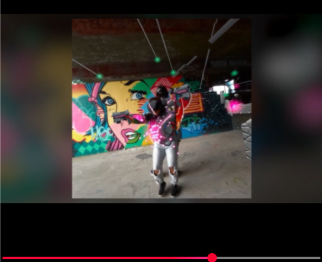
We have seen MR pass-through used to enhance other entertainment applications – such as the sport of lasertag. Development studio Freeroam.AR has released their innovative ‘Laser Limbo: AR Battle Game’ – using the pass-through capabilities of the Meta Quest 3 headset, and employing StrikerVR weapons, the fast pace lasertag-inspired eight-player blaster, offers a fun experience. The team brining a wealth of experience based on their previous work in the LBE VR scene, working on the popular LBE title ‘Tower Tag’. The ability to set this game up anywhere within a location, inside or out, offers a level of flexibility to offer MR as a pop-up revenue stream in small or big spaces. Also including different game modes, that include shooting other players or augmented drones all part of the phygital appeal.
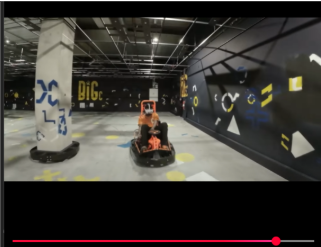
One entertainment sport application that has been given a new lease of life thanks to XR technology has been go-karting. Motorize karting as a pastime can trace its adaption back to the 1950’s with the modern karting experience established in the 1970’s. With the explosion of indoor e-karting the technology has lent itself to being used as a MR platform. Regarding headset-based systems, we have seen numerous concept demonstrators, but very few actual fielded products. One of the first real deployments of a VR driving experience was from SPREE Interactive with their ‘VR Bumper Cars’ platform, partnered with Eurogames. But more recently we have seen actual VR go-kart platforms deployed. One of the first coming from Arduinna Silva Studios, with their ‘Karting VR’ platform – the first installation of this was seen at the ‘BIG C’ facility in France. E-karting, powered by full VR immersion through PICO headsets, though not all the new applications go for full VR engagement.
More recently we have now seen MR directly applied to karting. The Stinger Report was one of the first to report on the Chinese karting services developer Anchi Amusement Equipment who revealed the launch of their ‘MR Karting’ platform. Implementing their e-karting platform to a MR experience, with the driver racing round a special course immersed via their PICO headset. Momentum in this aspect of the market has seen Western developers also start development of mixed reality karting platforms. It is interesting to reflect that the AR sports company meleap, which me covered previously also developed their own karting based AR experience to mixed results.
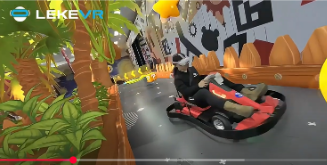
Also revealed for the first time, RaceParx, a leader in the go-karting business have developed ‘MR Go-Kart’ based on their premier mini-kart platform and employing PICO headsets in MR mode. Offering a blending of the real-world raceway with virtual elements to gamify the karting experience, viewed via their Pass-Through headset. This also comes as another Chinese developer, LEKE VR revealed their MR Go-Karting platform, using the latest e-karting systems, again linked to PICO headset visuals overlayed over the real-world Pass-Through – creating a highly phygital environment. We will later in the second part of this feature look at the application of frictionless MR applications in the karting scene, applying the latest projection technology.
4. Invasion of Smartglasses
With the current situation in the consumer VR sector, many are now pivoting towards AR and MR development. Recently, we saw one hardware and firmware developer look to deploy their AR approach to the LBE market. During the recent Amusement Expo International 2025, regarding the AR aspects of the market, we saw the appearance of SNAP. The technology and social media corporation, through their Spectacles division, developing their latest generation of AR glasses, and operating system infrastructure. The company last year has rolled out their latest (fifth) generation of smartglasses, (what we have described as “smartware”) and have looked towards the commercial and LBE sector as a springboard for user adoption.
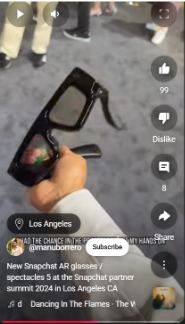
This is not the first foray into the LBE sector for the SNAP operation, having launched in 2017 ‘SnapBot’ – a popup photo vending machine. But the move into the space with their AR glasses could prove a lifeline to previous HoloLens users. Representing a considerable move by AR developer into the space. While companies like Vuzix Corp, a smartglasses, waveguides, and AR technologies developer, have announced the acquisition of an advanced waveguide R&D facility in Milpitas, California – scaling up commercial as well as consumer manufacturing capabilities as this sector grows.
Meta and their Reality Labs division have focused on making wearable AR and MR mainstream consumer applications. Our sister publication has already reported on the over 100 ongoing layoffs that impacted Reality Labs in April 2025, these included departures from Oculus Studios and the other Meta acquired VR game studios. This news was followed the same month with the reporting of Q1 revenue for the division. Reported during the investors call on the financial disclosure the CFO revealed a drop in revenue from the division of some 6-percent, claiming this was “due to lower Meta Quest sales…” This is the first official indication that the Quest 3 and Quest 3S were underperforming in sales. Attempting to place a spin on the sales decline, the executive counted in the investor call that these lower-than-expected VR sales had been “…partially offset by increased sales of ‘Ray-Ban Meta’ AI glasses”.
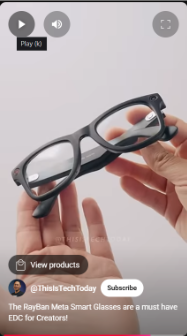
As many observers have voiced, Meta has dropped using the VR term internally, and were now doubling down on AR / MR. What this will mean for the remaining consumer VR community has yet to be defined. The layoffs from the VR and operation R&D teams were rumored to have placed in doubt a possible VR successor to the Quest 3 hardware, for the near-term. The social media and technology giant seeming to focus all current effort on its next generation AR Meta smartglasses (codenamed “Hypernova”), set for a 2026 release, to generate revenue light at the end of the tunnel. Regarding their MR interests, recent developments regarding focusing their HorizonOS to directly contest with the Samsung / Google AndroidXR, MR platforms soon to be launched. Also adding their name to the list of smartglasses development Lenovo revealed their plans this year.
The AR and MR landscape crowded with hopefuls, even Apple looking to enter the market with their own AR smartglasses with a custom chipset. Hoping to counter the less than stellar response to their previous ‘Apple Vision Pro’ spatial computing headset. Along with Samsung, Google and Meta, we also have Xreal One, Pimax and Play for Dream MR, market the pivot from VR to MR smartware. Other than SNAP, how many of these new headsets will be applicable for commercial entertainment deployment, is yet to be seen.
This concludes the first part of our two-part feature, the next part following shortly.